Fundamental Analysis Basics
How interest rates, inflation, growth, jobs, trade balances and risk sentiment move currencies, and how to combine fundamentals with your technical analysis.
- Lesson 24 of 30
- 3 min read
- Advanced
- Updated


Key takeaways
- Fundamentals explain why a currency moves; technical analysis helps decide when to trade.
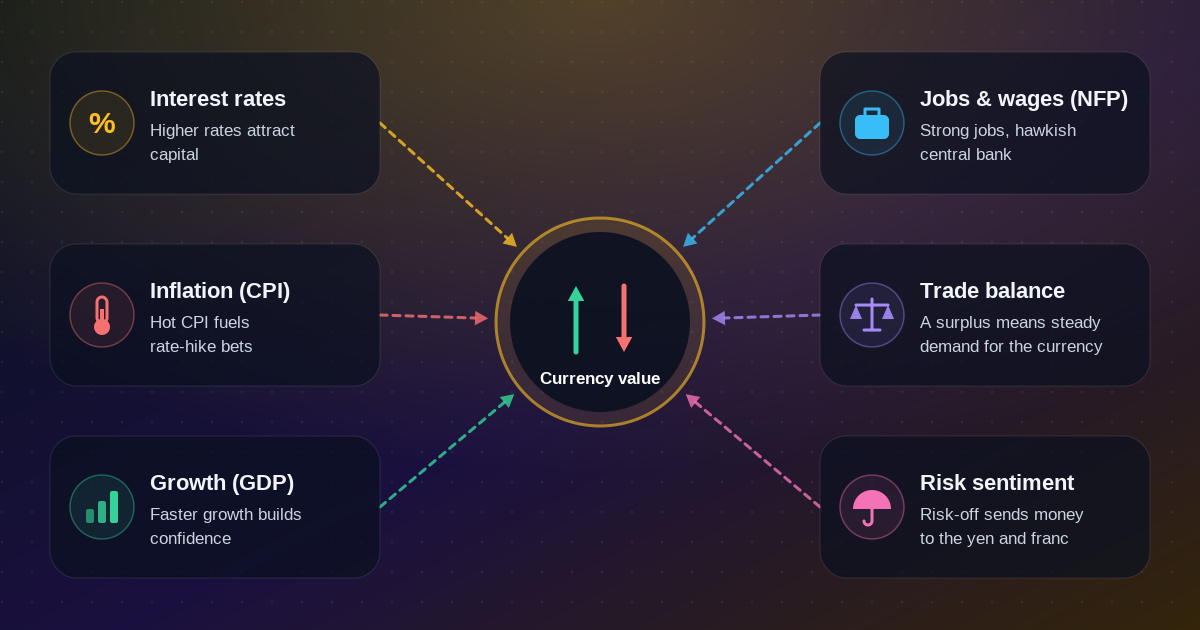
- Interest rate expectations are the biggest driver: higher expected rates tend to attract capital and strengthen a currency.
- Inflation, growth (GDP), jobs and wages, and the trade balance all shape what central banks do next.
- In risk-off markets money flows to safe havens like the yen and Swiss franc; in risk-on markets higher-yielding currencies like the Australian and New Zealand dollars tend to gain.
Getting to the Fundamentals
Technicals tell you when to trade; fundamentals tell you why. In Forex, fundamentals boil down to supply & demand for money itself-driven by economics, policy and sentiment. Let’s break it down, plain-English style. ☕️
Interest Rates
Higher rates → more attractive currency (carry). Watch rate-hike expectations, not just current settings.
Inflation
Hot CPI → central bank reaches for the rate-hike hammer. Persistent inflation usually boosts currency…until it throttles growth.
GDP & Growth
Strong GDP prints = confidence in that economy’s currency. But relative growth vs. peers matters more than absolute numbers.
Jobs & Wages
Non-Farm Payrolls (NFP) moves USD like a Netflix season drop.
Rising wages → inflation pressure → policy tightening.
Trade Balance
Countries that export more than they import (think Germany, Japan) see structural currency demand. Persistent deficits can drag.
Risk On / Risk Off
In panicky markets, traders rush to “safe havens” like JPY & CHF.
Euphoria? High-yielders (AUD, NZD) shine.
Must-Watch Releases 📅
Mark these on your calendar-spreads widen, stops get hunted, and opportunities abound.
| Indicator | Typical Impact | When |
|---|---|---|
| Central-Bank Rate Decision | Massive (rate, statement, presser) | Monthly / 6-weekly |
| CPI / Inflation | High-policy expectations | Monthly |
| Non-Farm Payrolls (US) | Very high for USD |
1st Friday |
| GDP (Advance) | Medium ➜ High | Quarterly |
| PMI Surveys | Sneak-peek on growth | Monthly (early) |
Pro tip: if you’re in a trade and a red-flag event is minutes away, either tighten stops or step aside-volatility loves surprise.
Quick Top-Down Checklist ✅
- What’s the global risk mood? (equities green/red, VIX low/high)
- Which central banks are hawkish vs. dovish right now?
- Upcoming high-impact data-surprise risk?
- Does technical structure align with the macro story?
- Setups with both tech + macro tailwinds get priority!
Fundamentals may feel like a firehose at first, but stick with it-soon you’ll read a CPI beat and instinctively know which pairs to watch. Keep this cheat-sheet handy and keep journaling in Tracom. 📔🚀
Frequently asked questions
What is fundamental analysis in forex?
It is the study of the economic and political forces behind a currency, such as interest rates, inflation, growth, employment and trade, to judge whether it is likely to strengthen or weaken against another.
What moves currency prices the most?
Interest rates, and expectations of where they are heading. Data that changes those expectations, especially inflation (CPI) and jobs reports, and central bank statements produce the biggest moves.
Should I use fundamental or technical analysis?
Most traders use both: fundamentals to understand the bigger trend and the risk events ahead, and technical analysis to time entries, place stops and manage risk.


Put it into practice with Tracom's trade journal, risk calculator and signal record. Free to download.