Hedging & Options - Your Trading Airbag 🛡️
Ever wished you could stay in the game while sleeping better at night? Hedging is basically insurance for your trades, and FX options are one of the smartest insurance policies around. Let’s unpack the jargon and show practical ways to smooth out those equity-curve potholes.
Why Hedge at All?
- Protect profits on an open position without bailing out completely.
- Limit downside when big news drops while you’re offline.
- Smooth cash-flows for businesses invoicing overseas (think Apple hedging EUR income).
Common Hedging Styles
Direct (Perfect) Hedge
Open the opposite position in the same pair. Long EUR/USD? Short the same lot size. Net exposure → zero. Easy, but ties up margin.
Correlation Hedge
Offset risk with a related asset: e.g. long AUD/USD & short gold futures (strong positive correlation). Imperfect but margin-friendly.
Options Hedge
Buy a call or put for downside (or upside) protection. Keeps the upside open while capping the pain 👌.
Vanilla Options - Calls & Puts
Call = Right to BUY a currency pair at a set price (strike). Put = Right to SELL. You pay a premium upfront, just like buying car insurance. Worst-case loss = premium paid.
| If You Expect | Buy | Sell |
|---|---|---|
| EUR/USD 🚀 up | Call | Put |
| EUR/USD 📉 down | Put | Call |
Popular FX Option Plays
- Zero-Cost Collar - Buy a put and sell a call to hedge downside “for free” (premium offsets); caps upside.
- Risk Reversal - Sell a put, buy a call (bullish) or vice-versa (bearish). Low cost direction bet often used by hedge funds.
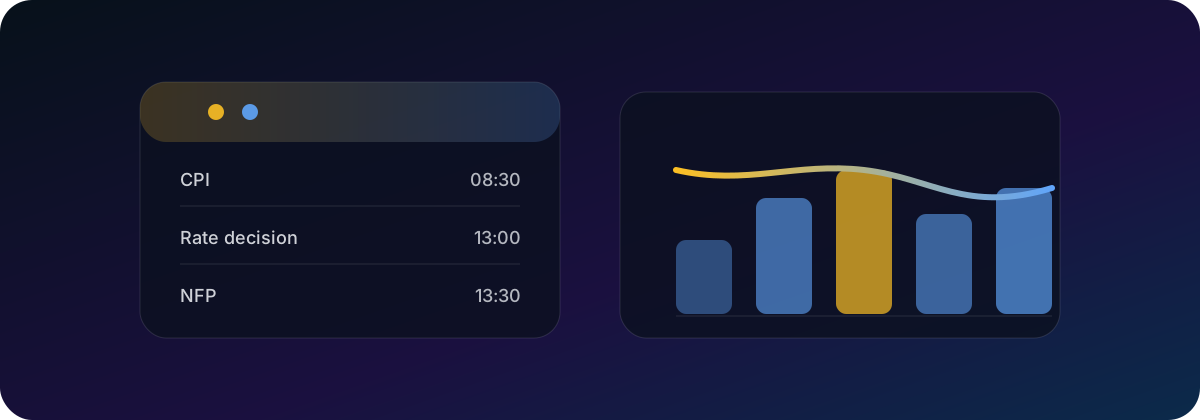
- Straddle / Strangle - Buy both call & put to play volatility ahead of big news (NFP, CPI). Needs a big move either way to profit.
Mini Case Study
You’re long GBP/USD at 1.2800. Nerves about a surprise BoE rate cut keep you up
at night. You buy a 1-week GBP/USD 1.2700 put for 25 pips premium.
• If price tanks to 1.2500 → put nets +200 pips, covering most losses.
• If GBP/USD rallies → you “lose” the 25 pips premium, but ride the upside.
Sleep tight 😴.
Pro tip: hedge size is key. Cover just enough to survive nasty surprises-not so much that it crushes your edge. Track each hedge in Tracom so you can see the true net P&L picture.